

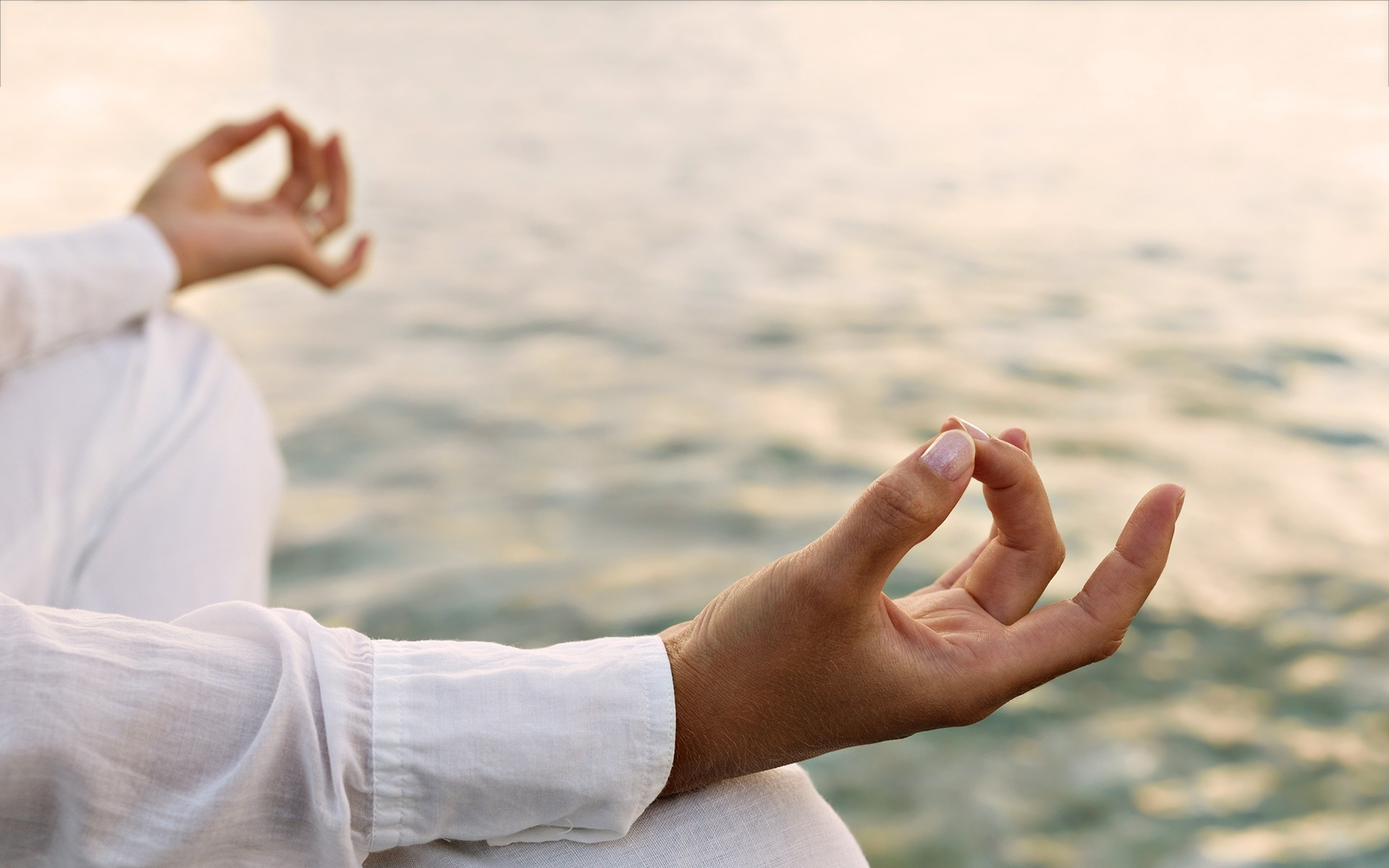
The pace of life for people in the Western world has accelerated dramatically. Countless pieces of information and expectations flow toward us every day, minute by minute. Processing all of this poses a major challenge for our brains. Unprocessed information causes a significant stress effect. It’s worth considering that stress isn’t caused by our environment, but by the way we react to it. This varies from person to person. We can also call it stress awareness — the given person’s ability to tolerate stress. The good news is that this ability can be significantly developed.
Too much information leads to a growing backlog of unprocessed input, which itself has a stress-inducing effect. This creates a self-reinforcing feedback loop. Under stress, decision-making ability fundamentally breaks down. The consequence of poor decisions is that we end up in a worse situation, which leads to further anxiety and stress. A negative spiral forms, and sooner or later we find ourselves at the bottom of the pit, quite possibly struggling with some serious physical illness.
This is compounded by the greatest stress factor of times of crisis: financial hardship. Financial insecurity carries an enormous stress burden. One consequence of this can be a significant decline in IQ. With reduced mental capacity, a person has even less chance of climbing out of the pit.
So what should we do? The most common stress-relief techniques include sport, proper nutrition, various active meditation methods, yoga, autogenic training, spending time in nature, and getting plenty of sleep. These are all good, effective methods, and I recommend them to everyone. How much of this can we actually put into practice?
Let’s be honest — if we had time for these, we probably wouldn’t be stressed in the first place.
The problem, still, is a lack of time. In this case, the efficiency of stress management plays a major role. It may seem odd to talk about speed when it comes to stress, but that’s what life’s circumstances demand.
Managing stress with brain training
It has been proven through experiments that brain training is one of the effective methods for managing stress. The reason lies in the passive meditation technique it uses. All you have to do is lean back and enjoy the relaxed state created by the light and sound impulses. It doesn’t require years of prior practice to reach this beneficial, relaxed state. Brain training doesn’t just create a momentary relaxed state — it can sustain this state for a longer period (noticeably for a few days), while also improving mental function and decision-making ability. Increased mental performance helps with processing information, can raise IQ, and improves learning ability. It’s clear that this directly counteracts the negative effects of stress. Last but not least, creativity can also increase, providing new ideas for solving our problems. This makes it easier to climb out of the pit!
It’s very important that this type of relaxation, as the name “training” suggests, can teach the brain to handle new situations.
These effects can be achieved most efficiently, with the least time investment and with flexible scheduling, using this method. One session takes about 30 minutes, and for the effect to be sustained, it should be done at least three times a week. The good news is that, just like at home, it can be done on your own schedule.
By resolving stress, our lives can take a new direction, and we can experience the joyful feeling of a positive spiral. With the help of brain training, we may be able to develop ourselves and improve our quality of life, allowing us to take responsibility for ourselves and our families as well.
Workplace stress
Anyone who works encounters workplace stress — whether as an employee at a multinational company or as a sole proprietor. Stress can come from personal conflicts, and it doesn’t even necessarily require a strict boss. It can come from the volume or difficulty of tasks to be completed, tight deadlines, or unexpected complications. Every such influence is a form of stress that affects us. Without the beneficial, strengthening kind of stress, we couldn’t live an energetic life — it’s necessary for survival, unlike harmful stress, which damages health. Hans Selye, of Hungarian origin, was the first to study stress with scientific rigor. His key finding was that the effect that hits us doesn’t in itself cause harm. The harm lies in our reaction to that effect.
From this we can draw very important conclusions. Our reaction to stress depends on us. It is shaped by past events, our mental state, our awareness, and our stress tolerance. Of course, we can also influence the magnitude of stress factors using various methods, such as improving time management, to-do lists, good planning — which we should do as much as possible. However, as we see from the scientific finding, it is the reaction to stress that causes the problem — the stress-related illnesses, the declining performance. We need to retune our own functioning so that, despite the stress, we can maintain a healthy state, so the body doesn’t turn against itself, and stress-related illnesses don’t develop.
The main problem is our brain’s finite processing capacity. During the reaction to a stressful environment, the body’s energy is quickly depleted. A state of energy deficiency sets in. In the short term, this can result in attention problems, shorter concentration span, slower reactions, memory decline, indecisiveness — in other words, a decline in mental capabilities. In the longer term, this energy-deficient state can lead to the development of stress-related illnesses.
People’s stress tolerance varies. Everyone has weaker and stronger abilities. As a result, group, standardized solutions are less effective than solutions for managing workplace stress that are based on individual assessment. During an individual assessment, it’s necessary to map out whether there’s perhaps an area of life, an excessive burden in the individual’s life, that requires more attention than average and thus weakens stress tolerance. By reducing burdens, increasing processing capacity, and applying relaxation, the harmful reaction to stress can be significantly reduced, and this way it may even be possible to avoid the decline in mental performance and the development of stress-related illnesses.
Brain training for companies
The most effective way to reduce stress, even for companies, is a method based on individual training. In the case of brain training, this means a personal assessment. Once a training program has been developed based on the assessment results, everyone can apply it themselves and enjoy its positive effects. It can also be used without an individual assessment. A general stress-reduction program sequence can be developed to create a restful, relaxed state.
Another possibility is improving the performance of managers. According to surveys, managers may be more at risk from the harmful consequences of stress. The consequence of stress is most apparent in decision-making ability. Management decisions fundamentally determine how a company operates. To make good decisions, it’s necessary to counteract the effects of stress, since good decisions are only made in a relaxed state. Brain training may be able to help with this — it may be able to set the ideal mental state for decision-making.
Brain training users have reported the following experiences after just a few (3–6) sessions:
- Deep relaxation, while recharging with energy
- Visualizations
- A feeling of calm and safety
- Clearer thoughts, simple solutions to problems
- Openness to the world — improved social connections
Since brain training requires a calm, quiet place, a comfortable chair or armchair, and an AVS brain-training device, the most suitable solution is a dedicated relaxation room system.
Relaxation room
A relaxation room is a special space where one or more relaxation armchairs suitable for brain training, along with AVS devices, are available for users. Relaxation requires dimmed lighting and a relatively quiet location. The stress-reduction programs require 2 or 3 sessions of 30–35 minutes per week. A properly designed relaxation room can be used by approximately 10 people per armchair for stress-reducing brain training.
Further beneficial effects
Beyond stress reduction, brain training technique can also improve other mental functions.
- mental energy level
- learning efficiency, language learning
- creativity
- concentration problems
- focus duration
- memory
Is constant tension making your everyday life miserable? Relax with brain training!
Most people struggle with stress intensely on a daily basis, which exhausts those affected both physically and mentally. In such cases, everyone tries to find a way toward balance, but various alternative methods don’t offer an effective solution for everyone. If you’ve already tried everything but nothing has worked, try relaxation with brain training!
The training works by simply having you lean back and enjoy the relaxed state created by the light and sound impulses. Afterward, you may feel like a different person — and along the way, you’ll also learn to process certain information during relaxation, making it much easier to handle the obstacles of everyday life, both at work and in your personal life.
Constant frustration and feeling unwell can eventually leave their mark on your health too. Don’t give in to this imbalance — enjoy life, and choose relaxation with brain training! Feel free to get in touch with us via any of our contact details!