
Blog · Sleep & Brain
When the brain doesn’t switch off even at night — what can Agytréner do?
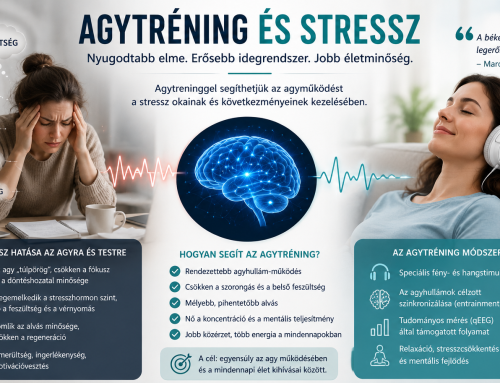
Nearly a third of Hungarian adults struggle with chronic sleep problems. After the fourth sleepless night, cognitive performance visibly declines, the immune system weakens, and the stress threshold drops. The Agytréner system — and in particular the audiovisual entrainment technology it employs — offers concrete, measurable tools for this problem as well.
Author: Agytrener.hu expert team · Reading time: ~10 minutes · Science-based · 2025
Sleep as the silent crisis of the modern age
According to a 2024 domestic survey, 46 percent of Hungarians have difficulty falling asleep — this ratio was still 31 percent four years earlier. The proportion of adults with severe sleep problems, meaning those who wake up repeatedly during the night and rise unrested, has also surged: from a previous 16 percent to nearly 29 percent today.1 Out of a hundred people, only two actually wake up truly rested.
Behind these numbers lie concrete physiological processes. Under prolonged stress, the proportion of deep sleep decreases significantly — this can be well documented even with wrist-worn sleep trackers. The amount of sleep is important, but the quality of sleep is at least as decisive: it doesn’t matter if someone spends 8 hours in bed if only a small portion of that is spent in a deep, restorative phase.
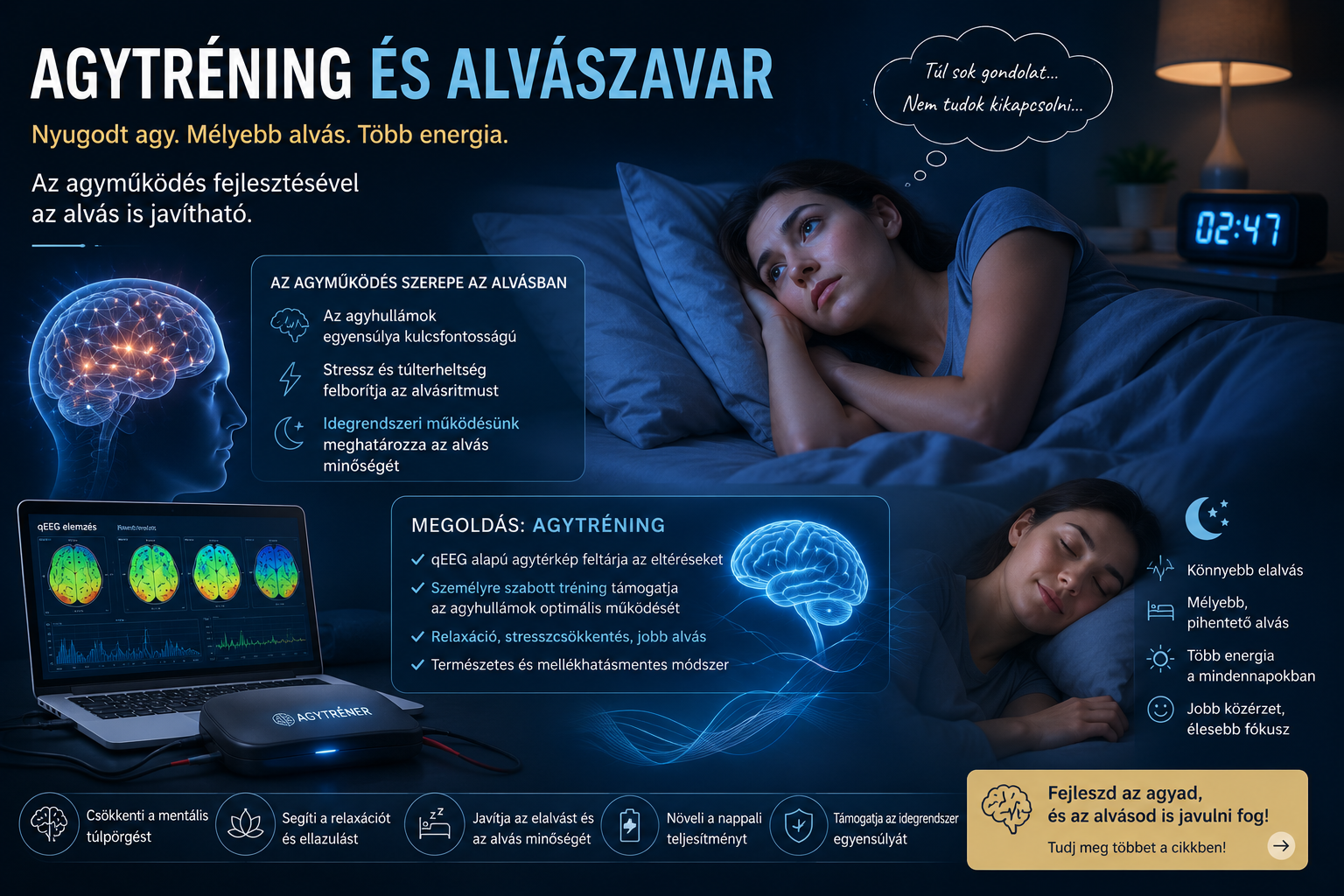
At presentations, Agytréner experts repeatedly emphasize: some kind of regulatory disturbance usually underlies sleep disorders. Persistently elevated stress states in the brain, disruption of the autonomic nervous system’s balance, cortical activation getting stuck at a high level — all of these impair falling asleep and the attainability of deep sleep. The good news: these processes are measurable and can be influenced.
Brainwaves and sleep — what actually happens?
At every moment, the brain generates electrical waves that show characteristic frequency patterns. In the waking state, the beta range (13–25 Hz) dominates; during relaxation and contemplation, alpha (7–13 Hz) comes to the fore; in the transitional phase before falling asleep, theta (4–7 Hz) takes over, and finally in deep sleep, delta (0.5–4 Hz) takes control.
In the brains of people struggling with sleep — especially those whose “mind races” after lying down — high frontal beta activity can typically be detected at night, while the body already wants to rest. Since Peter Hauri’s early neurofeedback research, we’ve known that this pattern can be specifically altered.
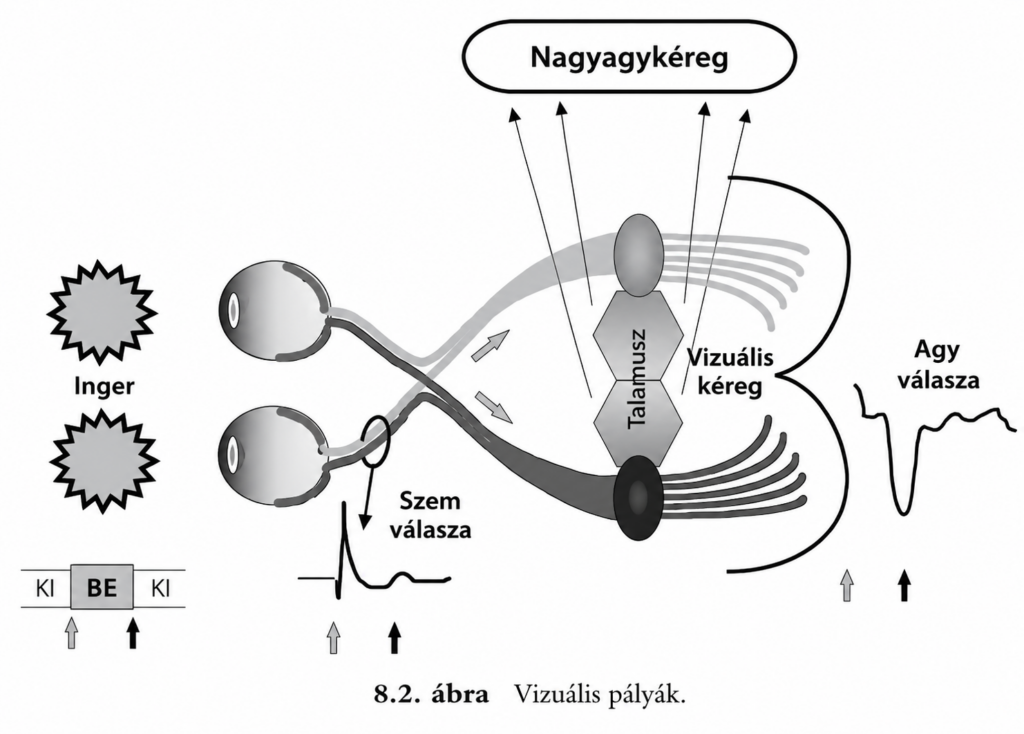
Audiovisual entrainment (AVE) — the main technology of the brain-training device — builds precisely on this mechanism. Rhythmically pulsing light and sound stimuli reach the cerebral cortex via the thalamus, where, through the frequency-following response, brainwaves tend to synchronize to the frequency of the stimulus.
How does Agytréner affect sleep? — five pathways
„Nothing calms an irritated amygdala and hypothalamus as effectively as alpha-range AVE.”
Collura & Siever — Auditory-visual entrainment in relation to mental health and EEG (2009)
What sleep-support programs exist in the Agytréner system?
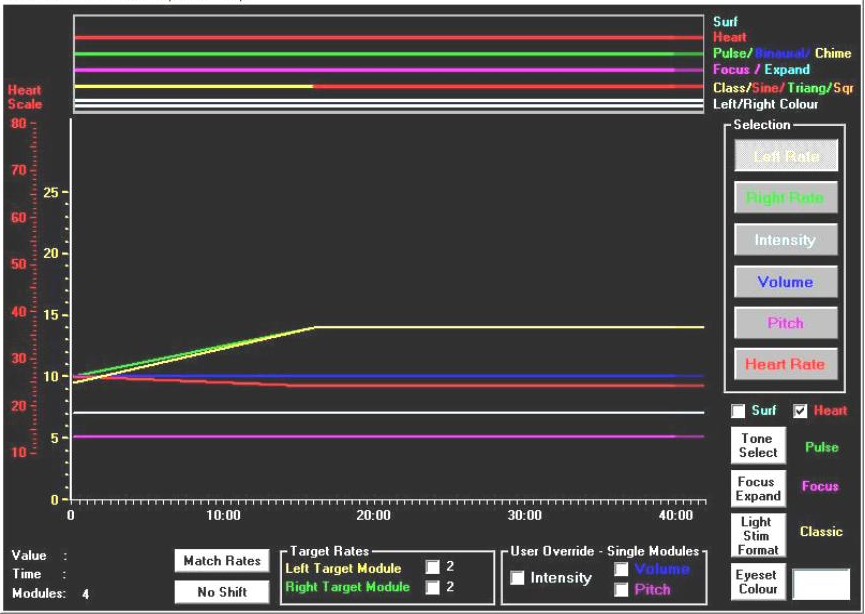
The brain-training device includes program types specifically designed for sleep, which are incorporated into the training plan based on the client’s individual profile — qEEG, HRV, cognitive test, and visual response.
| Program name | Frequency | Recommended for whom? | Main effect |
|---|---|---|---|
| SMR for Sleep | 14 Hz | “Racing mind” insomniac, with a relaxed body | Increasing SMR slows down somatomotor activity |
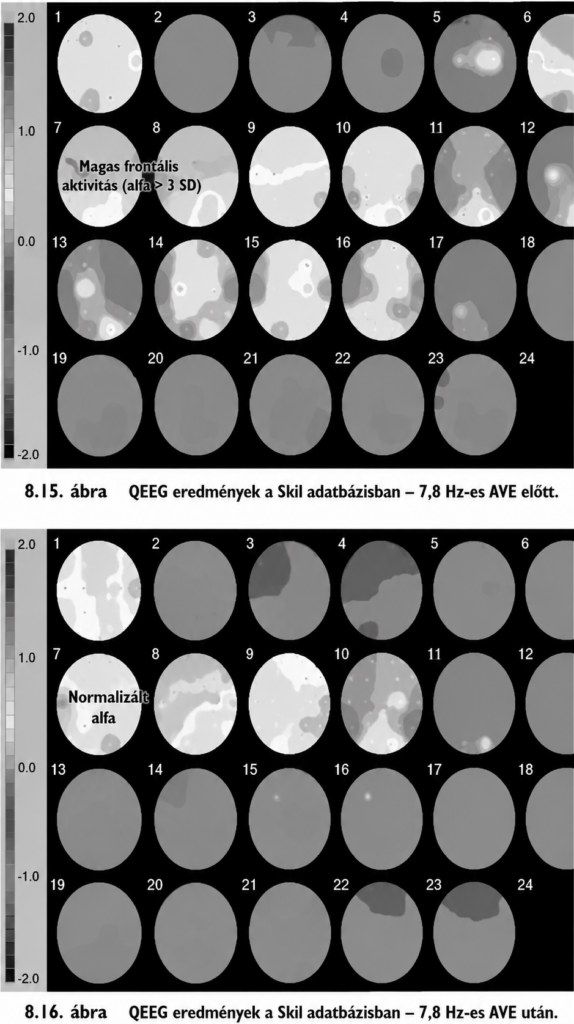
| Extended Schumann Resonance | 7.8 Hz | Anxious and tense sleep difficulty, disrupted circadian rhythm | Maximum increase in cerebral blood flow, deepening mental silence |
| Alpha/Theta | 6–10 Hz | Racing thoughts, pre-sleep anxiety | Dream-like transitional state, deep relaxation |
| Meditate to Sleep | 8 → 3 Hz | Anxious, pain-affected sleep-deprived individual | Gradual descent down to delta, initiating sleep |
| Delta Sleep | 3.5 Hz | Fibromyalgia sufferer, struggling with chronic pain | Direct stimulation of the deep sleep phase |
What does the research say?
The role of measurement: why isn’t training alone enough?
A distinctive feature of the Agytréner system is that treatment precedes training. During the assessment phase, a qEEG examination, HRV measurement, cognitive tests, and analysis of the visual responses triggered by the brain-training device are carried out. This complex picture reveals exactly which brain pattern the sleep disturbance is linked to.
One person struggles with elevated frontal beta activity at bedtime. In another case, the alpha peak frequency has slowed below normal, which results in a daytime “brain fog” sensation and also worsens nighttime sleep quality. In yet another case, HRV values indicate an imbalance in the autonomic nervous system.
The qEEG-based personalization allows the 6-week training program to be based not on a generic recipe but on the individual’s own brain and physiological profile. At the end of the first cycle, a re-measurement follows, and the program is fine-tuned based on the changes revealed.
- Stress-related insomnia: the inability to fall asleep while the body is tired but the brain has continuous “internal dialogue.”
- Disrupted circadian rhythm: chronic fatigue, fibromyalgia, deteriorating sleep quality after shift work.
- Anxiety-related sleep problems: nighttime awakenings with anxious thoughts, difficulty falling back asleep.
- Performance decline due to sleep deprivation: when poor sleep is already affecting daytime concentration, learning, and work performance.
- Combined treatment of chronic pain and sleep: where pain worsens sleep, and sleep deprivation lowers the pain tolerance threshold.
How is the 6-week Agytréner cycle structured?
Agytréner training is not a one-time session but a structured development process. The first step is always the assessment, the result of which is a personalized, 6-week training plan. In the case of sleep problems, this typically includes evening AVE programs, HRV breathing exercises, and — where the individual profile warrants it — supplementary daytime activating programs.
The role of color and music in sleep support
An additional layer of the brain-training system is the application of various color and music stimuli. The blue light of the AVE glasses is the classic choice for meditation and sleep support — physiologically it lowers blood pressure, regulates sleep patterns and thyroid function, and psychologically it increases the sense of calm and inner peace.
In terms of music, research recommends the slow movements of symphonic pieces for those struggling with sleep disorders: the first movement of Beethoven’s Moonlight Sonata, the steady, meditative rhythm of Bach’s harpsichord pieces, Schumann’s Träumerei. These are not merely pleasant background sounds — their sound patterns, tempo (generally around 60 bpm) and dynamics exert a direct physiological effect on breathing, heart rhythm and cortisol levels.
Would you finally like to wake up rested?
During a free, 15-minute phone consultation we will discuss your specific sleep problem and explain what an assessment and training program suited to you would look like.
No-obligation, 15-minute phone call · No registration fee
Sources used
- Index.hu: “Hungarians are sleeping worse and worse, only two in a hundred wake up rested” — March 16, 2024.
- Collura, T. F. & Siever, D. (2009). Auditory-visual entrainment in relation to mental health and EEG. In Evans, J. R. (ed.): Introduction to QEEG and Neurofeedback, 2nd edition. Elsevier. pp. 195–225.
- AVE Session & Protocol Book, Revised 2022. Mind Alive Inc., Edmonton, Alberta, Canada.
- Shealy, N. et al. (1989). A comparison of depths of relaxation produced by various techniques and neurotransmitters produced by brainwave entrainment. Shealy and Forest Institute (unpublished).
- Fox, P. & Raichle, M. (1985). Stimulus rate determines regional blood flow in striate cortex. Annals of Neurology, 17(3), 303–305.
- Hauri, P. (1982). The treatment of psychologic insomnia with feedback. Biofeedback & Self Regulation, 7(2), 223–235.
- Berg, K., Mueller, H., Seibel, D. & Siever, D. (1999). Outcome of medical methods, audio-visual entrainment, and nutritional supplementation in the treatment of fibromyalgia syndrome. Mind Alive Inc.
- Halpin, S. J. et al. (2023). A feasibility study of pre-sleep audio and visual alpha brain entrainment. Frontiers in Pain Research, 4, 1096084.
- BrainTap Research Center (2022). Effect of Audio-Visual Brain Entrainment on Mood and Quality of Sleep: a pilot trial. research.braintap.com.