
Agytréner.hu · Education · Reading time: ~9 min
What Stress Does to Your Body – and How to Reverse It
Chronic stress doesn’t just make you tired. It measurably damages the processes taking place in the brain, distorts hormonal balance, and produces physical symptoms for which many people search for a medical explanation for years – without ever finding the real cause.
János Selye, the pioneer of stress research, described decades ago that stress is not an external force acting against a person, but rather the way we react to it. This also means that the pattern of reaction can be changed. Nevertheless, most people spend years treating their symptoms – sleep disorders, high blood pressure, tension – while the nervous system’s baseline state remains unchanged.
Brain training starts from this baseline state. With measurement.
The biology of stress – what happens inside
The body’s response to stress is originally a short-term protective mechanism. The problem starts when it lasts for days, weeks, months. Persistently high cortisol levels break down the immune system, disrupt sleep, and trigger inflammatory processes. From the brain’s perspective, one of the most significant consequences of chronic stress is the decrease in serotonin and noradrenaline levels – these regulate mood, concentration, and sleep quality. When their levels remain persistently low, depression develops. This is not a mood, but a biochemical state.
People living with long-term anxiety also develop so-called adrenal fatigue, which manifests as exhaustion and declining performance. In a well-known experiment, participants were exposed to significant financial stress, and an IQ test was administered before and after. Under financial pressure, the result worsened by an average of 10 points. This clearly shows that stress concretely reduces not only mood but also thinking capacity.
What appears in the body
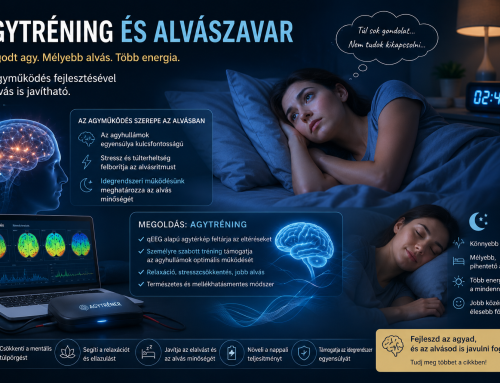
The physical symptoms of chronic stress are often not connected to their triggering cause. High blood pressure, sleep disorders, stomach ulcers, headaches, a weakened immune system – all appear on the list. Sleep is a particularly sensitive area in this regard. If someone has significant daily stress, the amount of deep sleep at night measurably decreases. Approximately 30% of the total population is affected by some form of sleep disorder, which triggers a vicious circle: sleep deprivation worsens stress tolerance, and greater stress further worsens sleep.
Many people spend years treating the symptoms of their sleep disorder, while the cause – the nervous system’s overdriven baseline state – remains untouched.
Where measurement begins – HRV and the autonomic nervous system
Heart rate variability (HRV) is one of the most informative indicators of how the body handles stress. The interval between two heartbeats continuously changes, and the pattern of this variability allows conclusions to be drawn about the state of the autonomic nervous system. If someone lives with chronic stress, HRV decreases: the heartbeat becomes more uniform, losing its flexible responsiveness. This indicates a persistent dominance of the sympathetic nervous system – the body is permanently in a state of readiness.
In a stressed state, breathing speeds up: 18–20 breaths per minute. In a relaxed, meditative state, this drops to 8–10. During the assessment, the HRV measurement shows where the balance of the autonomic nervous system actually stands. This is one of the starting points of the individual training plan – and at the same time, the first piece of data that explains a great deal.
Audiovisual stimulation – what the research shows
One of the central tools of brain training is audiovisual entrainment (AVE): pulsing light and sound stimulation can influence the brain’s own rhythm. The brain tends to synchronize with a repeating, rhythmic stimulus, and brainwaves change accordingly. This phenomenon – the frequency-following response – was discovered by research in the 1930s, and has been confirmed by numerous clinical studies in the decades since.
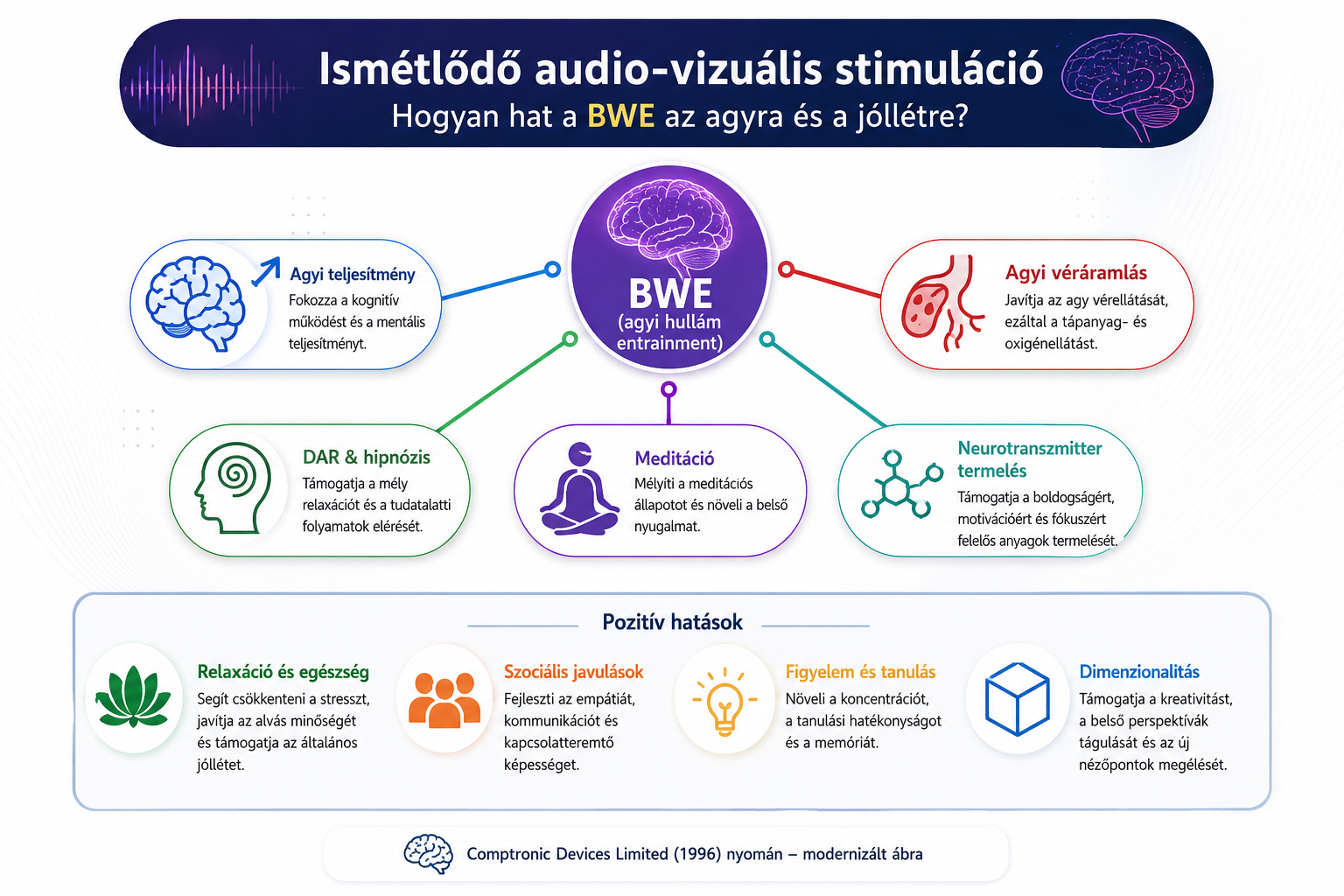
The neurological areas and clinical outcomes affected by audiovisual stimulation (BWE) – from cerebral blood flow to neurotransmitter production
Source: Siever, D. – „The Rediscovery of Audio-Visual Entrainment”, Comptronic Devices Limited, 1996
According to a summary study by Collura and Siever, 4–8 minutes after the start of AVE treatment the body starts to relax: electrodermal activity decreases, hand temperature normalizes, breathing shifts to abdominal breathing, and the heartbeat becomes even. This is a measurable sign of the sympathetic nervous system withdrawing. In Kroger and Schneider’s 1959 study, about 80% of subjects reached a light or deep relaxation state within 6 minutes.
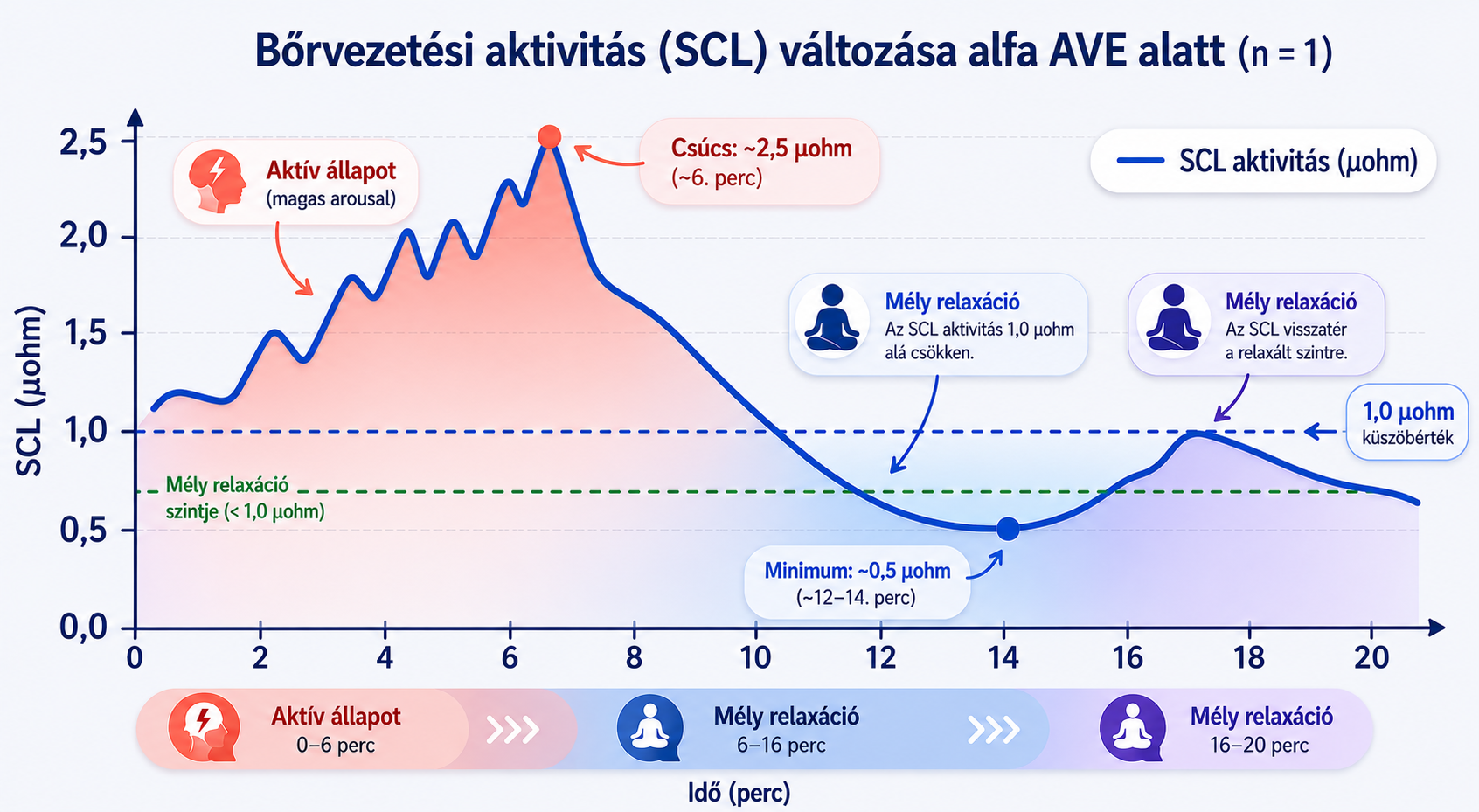
The decrease in electrodermal activity (SCL) during alpha-frequency AVE treatment. Normalization begins about 6 minutes after the start of treatment – this is the measured decline of sympathetic tone.
Source: Collura, T.F. & Siever, D. – Auditory-Visual Entrainment in Relation to Mental Health and EEG, Elsevier, 2009
Peripheral blood flow is closely linked to the state of the autonomic nervous system. In someone who is chronically stressed, the hands are cooler, because blood flows inward to the trunk. During AVE treatment this reverses: hand temperature rises.
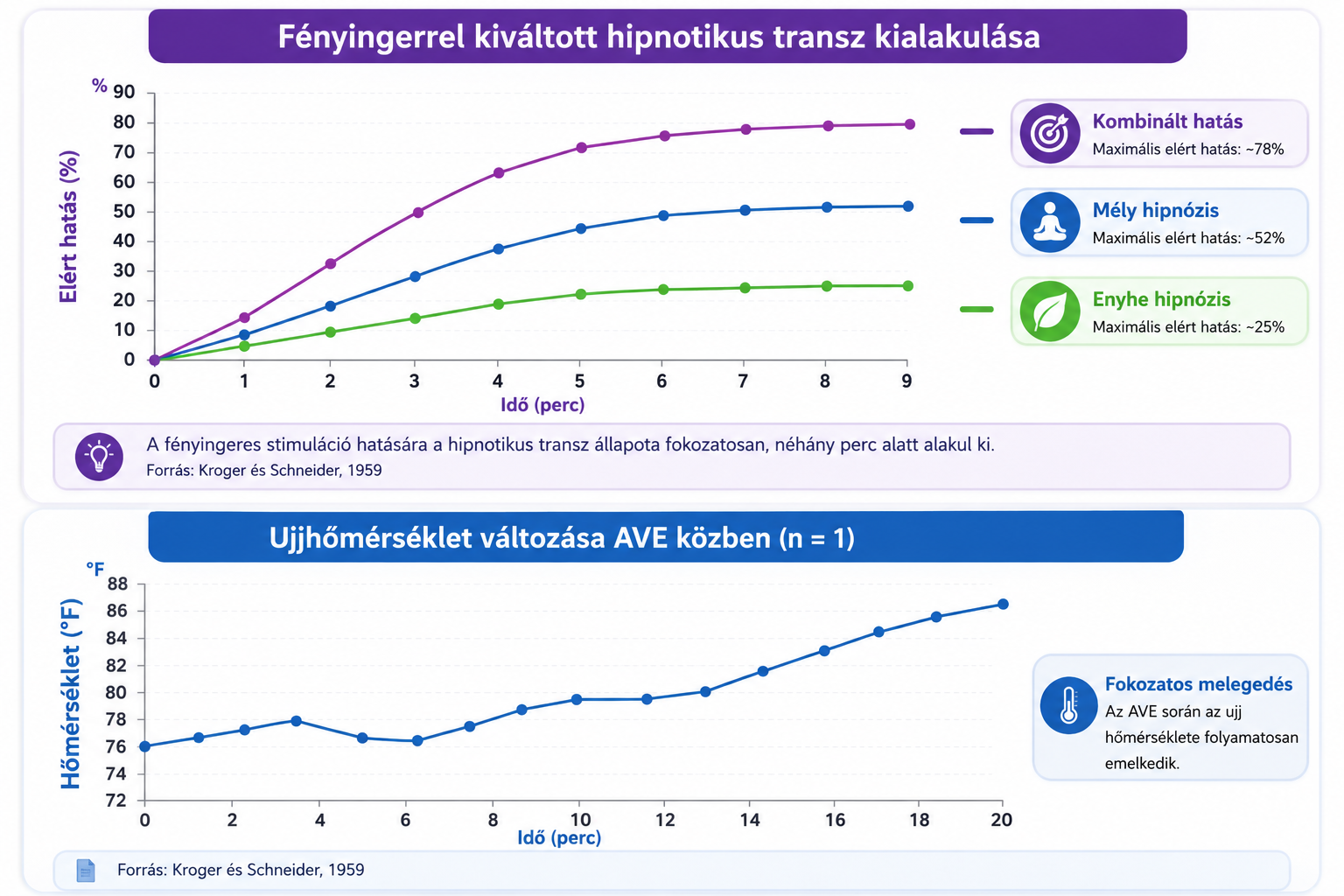
Normalization of hand temperature during AVE treatment – the dilation of blood vessels is one of the measurable signs of parasympathetic nervous system activation.
Source: Collura, T.F. & Siever, D. – ibid., 2009
Neurotransmitters: serotonin, endorphin, melatonin
Shealy and colleagues measured in the 1980s what changes in the blood as a result of a 30-minute, 10 Hz white light treatment. Serotonin, endorphin, and melatonin levels all increased, while daytime melatonin levels decreased – indicating heightened alertness. The result showed that AVE treatment produced the relaxation response more effectively than self-hypnosis, brain electrostimulation, and binaural music recordings.
People living with long-term anxiety can enter a sympathetically burned-out state: serotonin and noradrenaline production shuts down, leading to the development of depression. Several clinical studies have confirmed that after an AVE treatment program, the levels of depression, anxiety, and suicidal thoughts decreased significantly.
Cerebral blood flow and metabolism
According to SPECT and fMRI studies, reduced cerebral blood flow is associated with anxiety, depression, attention disorders, and cognitive decline. AVE treatment increases overall brain glucose metabolism by 5%, and in the visual cortex area, at 7.8 Hz stimulation, it can reach an increase of as much as 28%. This is the frequency that matches the Schumann resonance – the electromagnetic oscillation of the Earth-ionosphere system, to which the human nervous system is evolutionarily tuned.
Clinical study results
Brucato and Abascal conducted a stress management experiment involving police officers in 1990. After the AVE program, participants’ pulse and muscle tension decreased, their coping ability improved, and anxiety – measured both as a state and as a trait – significantly decreased.
In Berg and Siever’s 2004 study of 74 people, individuals suffering from seasonal affective disorder received 20 Hz AVE treatment. Depression measurably decreased on the Beck scale, and social activity improved.
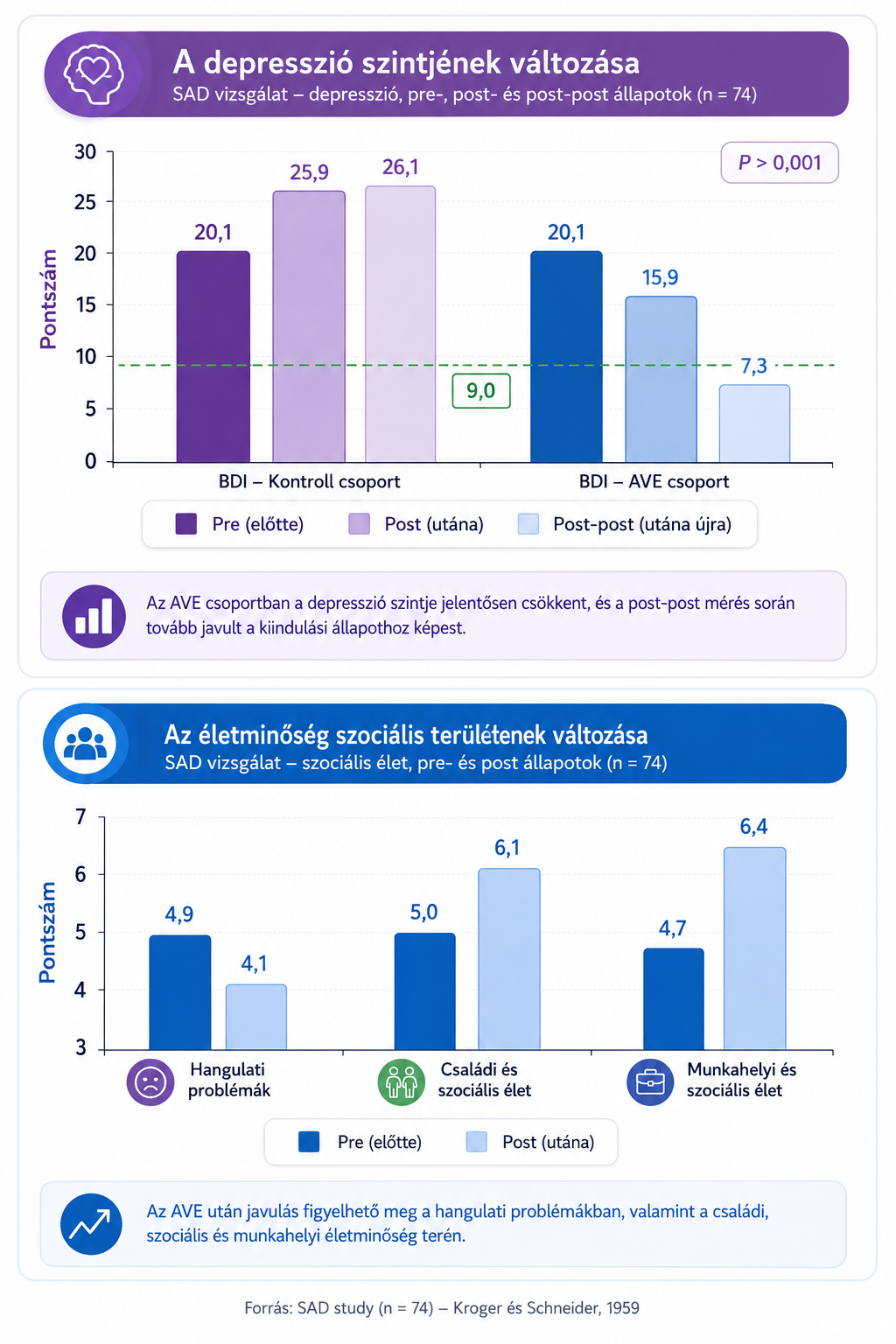
Seasonal affective disorder study (n = 74): depression scores (Beck scale) and changes in mood/social quality of life in the AVE group. The control group’s values essentially did not change.
Source: Berg, K. & Siever, D., 2004, in: Collura & Siever, 2009
With the involvement of 12 participants suffering from chronic pain – fibromyalgia, lupus, arthritis, TMJ disorder – Siever and Twittey conducted an eight-week AVE treatment in 1997. Pain levels improved significantly at p < 0.005, as did the Beck Depression Index. In Anderson’s 1989 migraine study, participants rated 49 out of 50 attacks positively, and in 36 cases the attack stopped completely – the average attack length of 6 hours before treatment dropped to 35 minutes.
How the assessment and the 6-week training are structured
The process begins with an assessment phase. The qEEG shows the distribution and coherence of brainwaves. HRV measurement reveals the balance of the autonomic nervous system. Cognitive tests examine memory, attention, and reaction time. The Agytréner device analyzes visual responses, from which an individual neurological profile can be compiled.
qEEG
Brainwave and coherence map
HRV
Autonomic nervous system balance
Cognitive test
Attention, memory, reaction time
Visual response
Individual neurological profile
What changes during the 6 weeks
The nervous system can be trained, and the pattern of brainwaves can be changed. Over the course of a series of AVE treatments, the brain literally rebuilds its frequency preferences – this is called neuroplasticity. In the first few weeks, many people experience improved sleep, reduced irritability, and reduced muscle tension. The goal is not immediate relief – although that is also typical – but rather that the nervous system learns the relaxed state without needing outside help.
It is worth mentioning that the training is also significant from a self-knowledge perspective. The assessment brings to light connections that many people have suspected the answer to for years, but have never seen objectively confirmed.
If you recognized yourself in this article
The assessment is a structured process lasting 60–90 minutes. The result is not a general diagnosis, but a personal, measurement-based profile – from which it is immediately clear what is worth doing.
The first step is a free, 15-minute phone conversation. It will reveal whether the training is suitable for your situation.
References used:
Collura, T.F. & Siever, D. (2009): Auditory-Visual Entrainment in Relation to Mental Health and EEG. In: Evans, J.R. (ed.) Introduction to Quantitative EEG and Neurofeedback, 2nd ed., Elsevier.
Siever, D. (1997): The Rediscovery of Audio-Visual Entrainment. Comptronic Devices Limited.
Shealy et al. (1989): Neurotransmitter changes following 10 Hz photic stimulation.
Berg, K. & Siever, D. (2004): A controlled study of audio-visual entrainment for the treatment of seasonal affective disorder.
Brucato, D. & Abascal, J. (1990): AVE stress reduction study, Metro-Dade Police Department.
Fox, P. & Raichle, M. (1985): Stimulation-evoked increases in cerebral blood flow and metabolism.