

Agytréner.hu · Education · Reading time: ~5 min
Relaxation and Performance Improvement: The Power of Recovery
Many people believe that the key to better performance is simply more work and persistence. In reality, one of the most important – yet most underrated – components of peak performance is relaxation: the conscious recovery without which progress quickly stalls.
Why does performance require rest?
Performance and recovery are closely linked concepts, yet many people see them as opposites. Sports psychology and workplace performance research have long recognized the principle of supercompensation: the body actually grows stronger during the rest period after exertion, not in the moment of exertion itself. If someone keeps pushing without adequate recovery, their performance eventually starts to decline, even as they work more and more. This is familiar to athletes dealing with overtraining symptoms, but also to office workers edging toward burnout.
What happens in the body during relaxation?
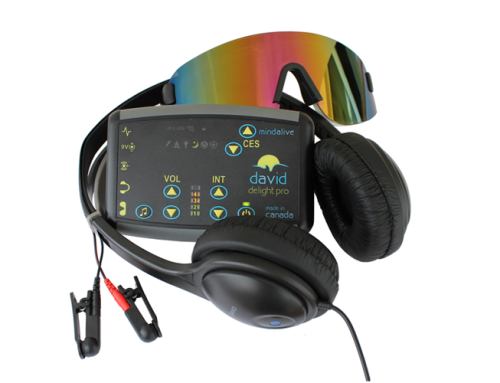
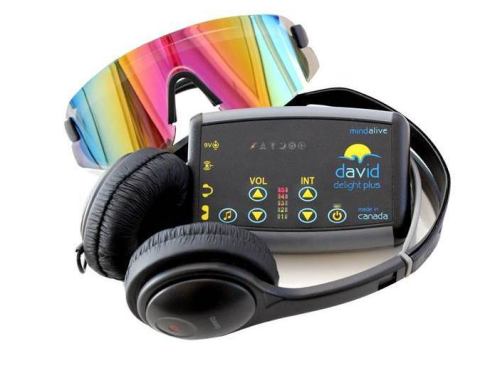
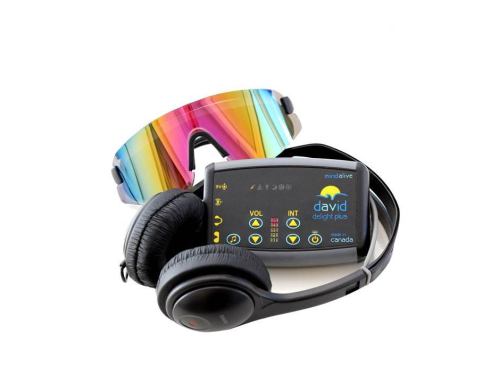
In everyday life, this is often confused with mere inactivity – but true relaxation is an active process occurring at the level of the nervous system, not simply the absence of activity. Physiologically, relaxation means activation of the parasympathetic nervous system: heart rate slows, blood pressure drops, breathing deepens. This is the state in which the body can actually recover – muscle tissue repairs, memory consolidates, and stress hormones, cortisol above all, decrease. American cardiologist Herbert Benson described the so-called relaxation response back in the 1970s – the physiological counterpart to the stress response, one that can be consciously triggered through practice. The audio-visual stimulation (AVS/AVE) used in brain training helps achieve exactly this state: rhythmic light and sound pulses help the brain shift into a calm, regenerative state more quickly.
How does relaxation fit into performance improvement?
Regular, planned relaxation isn’t a luxury – it’s an investment in performance. For athletes, it helps maintain mental focus between preparation and competition; in an office setting, it helps sustain concentration and decision-making ability. Agytréner devices’ programs for relaxation and performance improvement are specifically designed to induce a deep, regenerative state in a short time – typically 20–30 minutes – that fits easily into a daily routine, whether before a workout or before an important meeting.
Who is this approach recommended for?
Relaxation-based performance improvement can be especially useful for athletes, executives, and anyone who regularly performs under high pressure and feels that fatigue is starting to outpace their abilities. The goal isn’t rest at the expense of performance, but a conscious balance between the two – which is exactly what brain training supports in a measurable, objective way. Coaches and professionals working on sports performance are increasingly building recovery into the preparation plan, not as an afterthought, but as one of the fundamental pillars of development. A well-timed twenty-minute relaxation session is often more effective than an extra hour of pushing through fatigue – a realization that more and more performance-driven professionals and teams are consciously building into their daily routines.
Next Step
Would you like to experience how relaxation can improve your performance? Book a free phone consultation!
References:
Benson, H. (1975): The Relaxation Response. William Morrow.
Selye, H. (1956): The Stress of Life. McGraw-Hill.
Collura, T.F. & Siever, D. (2009): Auditory-Visual Entrainment in Relation to Mental Health and EEG. In: Evans, J.R. (ed.) Introduction to Quantitative EEG and Neurofeedback, 2nd ed., Elsevier.