

Agytréner.hu · Education · Reading time: ~5 min
Meditation and Brain Training: How Do They Reinforce Each Other?
Meditation has been a known path to inner calm for thousands of years, while brain training is modern neuroscience’s answer to the same need. Many don’t realize that the two aren’t rivals but allies – and that combining them can be surprisingly effective.
What does research show about meditation?
The effects of meditation are now supported not only by subjective accounts but also by objective measurements of the brain. Sara Lazar and colleagues, in their now-classic 2005 study, found that the cortex of regular meditators is measurably thicker in certain areas – such as the prefrontal cortex and the right anterior insula, which are responsible for attention and processing bodily sensations – compared to non-meditators. Richard Davidson and his colleagues, in another widely cited study, found that even an eight-week mindfulness program produces a measurable change in the brain’s electrical activity and improves immune system responsiveness. These findings indicate that meditation doesn’t just calm you down – it reshapes how the brain functions over the long term.
Where can brain training help?
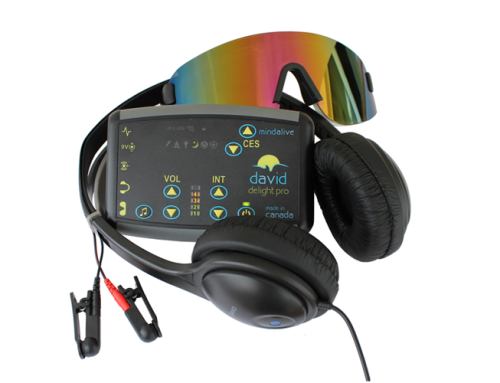
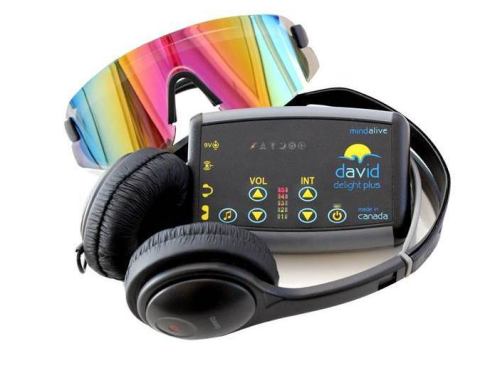
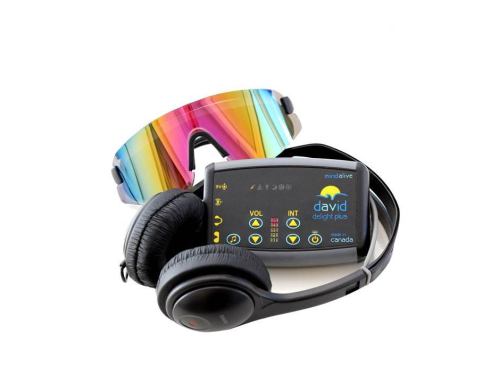
Learning traditional meditation, however, takes time and persistence. Many beginners practice for months, even years, before they can reliably reach the deep, relaxed state of mind that experienced meditators consider natural. This is where brain training can step in: the audio-visual stimulation (AVS/AVE) it uses can influence the brain’s own electrical rhythm through rhythmic light and sound pulses. This phenomenon is called the frequency following response: the brain tends to “tune in” to a repetitive, rhythmic stimulus, and the brainwaves gradually shift toward the desired, relaxed – alpha or theta – range. This closely resembles the state measured by EEG in experienced meditators, except here an external device supports the process.
Does it complement or replace meditation?
It’s important to be clear: brain training doesn’t replace meditation – it offers a kind of accelerated introduction to it. For most beginners, the hardest step isn’t learning the technique itself, but simply reaching the state in which meditation can deepen – quieting the mind and releasing physical tension. AVE-based brain training provides concrete help here: regular practice gradually teaches the nervous system how to reach a relaxed state more quickly. Over time, this ability becomes easier to summon on its own, without a device – meaning the training actually serves to develop one’s own meditation skill.
Who is this combined approach recommended for?
Combining meditation and brain training can be especially useful for people living stressful, high-speed lives who want to try meditation but have struggled to find the calm needed to begin. It’s also a good choice for those who already meditate regularly and want to deepen their practice using objective, measurement-based feedback. Developing relaxation and concentration together like this strengthens mental wellbeing from both directions.
Next Step
Would you like to experience how brain training supports relaxation and meditation? Book a free, 15-minute phone consultation, and we’ll discuss how this fits your situation.
References:
Lazar, S.W. et al. (2005): Meditation experience is associated with increased cortical thickness. NeuroReport, 16(17), 1893–1897.
Davidson, R.J. et al. (2003): Alterations in brain and immune function produced by mindfulness meditation. Psychosomatic Medicine, 65(4), 564–570.
Siever, D. (1997): The Rediscovery of Audio-Visual Entrainment. Comptronic Devices Limited.
Benson, H. (1975): The Relaxation Response. William Morrow.