
Agytréner.hu · Education · Reading time: ~5 min
Concentration Improvement for Adults: What You Can Do, and How AVS Helps
In the age of digital devices, sustained attention is an increasingly rare resource. Many people struggle to concentrate, whether on a longer task or even a conversation. Fortunately, concentration improvement is a trainable skill – and AVS technology can help with it too.
Why is it harder to concentrate today?
Constant notifications, multitasking, and a nonstop stream of stimuli put a heavy strain on the brain’s attention system. Researchers have long studied how chronic distraction affects cognitive performance, and the results are clear: the more often someone switches between tasks, the harder it becomes to achieve deep, sustained focus. This isn’t a personal weakness – it’s the brain adapting to its environment. The good news is that this adaptation can be reversed. Concentration, much like a muscle, can be trained, and the more consciously we work on it, the faster it improves.
What does science say about brainwaves and attention?
Neuroscience has known for decades about the link between brainwave patterns and attentional states. M. Barry Sterman’s research in the 1970s showed that strengthening the sensorimotor rhythm (SMR, around 12–15 Hz) improves focused, alert attention. This laid the groundwork for the use of neurofeedback and audio-visual stimulation (AVE) in addressing attention problems. Joyce and Siever, in a study published in 2000, found that an AVE-based program measurably improved the performance of children with behavioral and attention difficulties in a school setting. Although this research focused on children, the underlying principle – that rhythmic stimulation at the right frequency helps the brain reach a focused state – holds for adults as well.
How does AVS technology help in practice?
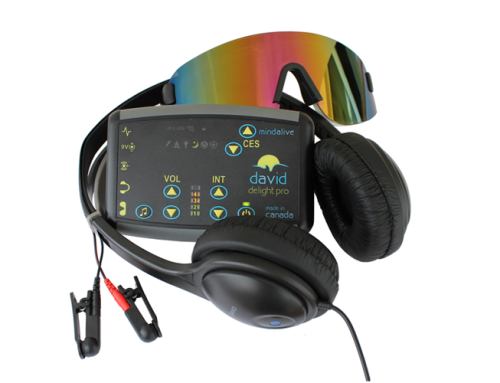
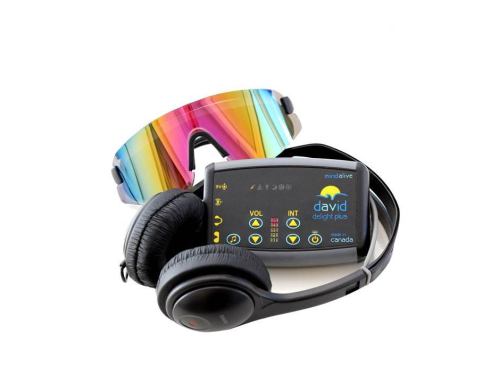
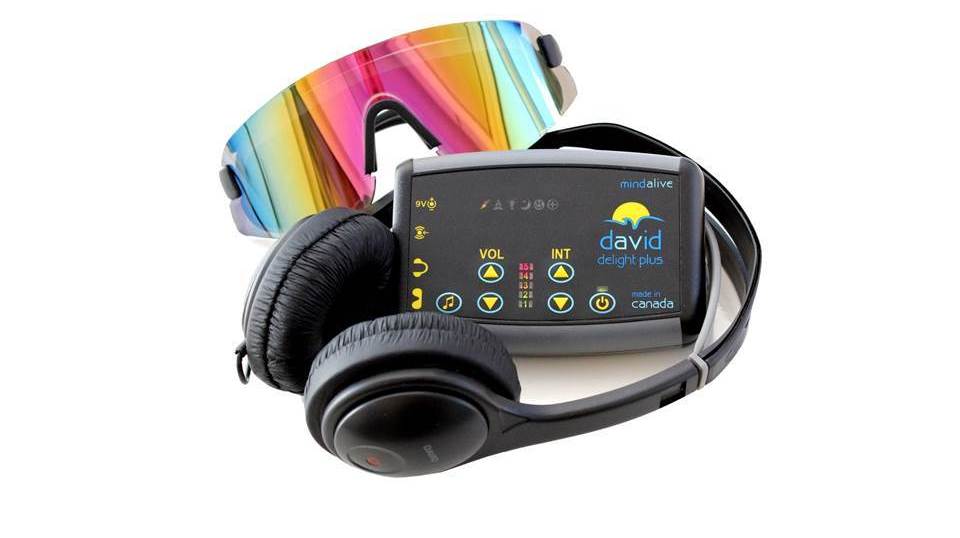
The concentration-focused programs on Agytréner devices use light and sound pulse patterns that target the frequency range associated with attention. With regular practice over a few weeks, the brain gradually learns to reach this state more quickly and sustain it longer – so the effect carries over beyond the training session itself. Many people report that after regular training, they find it easier to immerse themselves in a task, are less thrown off by outside stimuli, and feel mentally fresher by the end of the day.
Simple everyday steps for better focus
Alongside the technology, a few simple habits can help a lot: turning off notifications for set periods, handling tasks one at a time instead of in parallel, and building in regular short breaks all contribute to sustaining concentration. Sleep deprivation and chronic stress are among the biggest enemies of focus, which is why concentration improvement and stress reduction are actually closely linked – this is exactly why brain training often targets both at once, contributing to overall performance improvement as well. It’s also worth noting that attention isn’t constant: most people’s attentional capacity fluctuates with time of day, meals, and energy levels, so it helps to notice when you’re most productive and schedule the most demanding tasks for that window.
Next Step
Would you like to test where your attentional performance currently stands, and how you can improve it further? Sign up for a free state assessment.
References:
Sterman, M.B. (1996): Physiological origins and functional correlates of EEG rhythmic activities: implications for self-regulation. Biofeedback and Self-Regulation, 21(1), 3–33.
Joyce, M. & Siever, D. (2000): Audio-visual entrainment program as a treatment for behavior disorders in a school setting. Journal of Neurotherapy, 4(2), 9–25.